
Warehouses get harder to run every year: more stock, more equipment, tighter delivery windows and fewer people to check everything by hand. IoT sensors and software let a manager see the whole building on one screen and act before small problems become expensive ones.
Key takeaways
- Every warehouse step, from receiving to shipping, depends on knowing where things are and what state they are in.
- Sensors track free space, storage conditions, equipment health, energy use, access and safety.
- HAZER shows it all as live widgets, sends alerts and can act automatically.
How a warehouse works
- Receiving: goods are checked for size, weight and quantity. From here the warehouse is responsible for their condition.
- Put-away: each item goes to the best free location for its size, weight, temperature and humidity needs. Chilled goods must reach cold storage fast.
- Picking: orders are picked from known locations, quickly and without mistakes.
- Packing: goods are protected with the right, light packaging.
- Shipping: the right goods are loaded, dispatched and delivered on time.
The limits of managing by hand
A manager running everything manually has to track goods and space, watch staff on CCTV, keep air conditioning, freezers, generators and lighting working, and make sure forklifts are fuelled, scanners charged and conveyors undamaged. Something always slips, and every slip means spoiled goods, lost time or a stopped line.
A smarter warehouse
The sensors
- Smart beacons show free slots and follow goods inside the building.
- NFC and RFID tags hold size, maker, expiry date and serial number for remote inventory.
- Equipment sensors warn of low fuel, low oil or overload before a breakdown.
- Smart shelves with ultrasonic sensors show free space and guide staff during put-away and picking.
- Safety sensors detect gas leaks and fire.
- Energy meters track electricity, gas and water and flag unusual use.
- Access control with biometric or RFID points keeps restricted areas restricted.
The software: HAZER
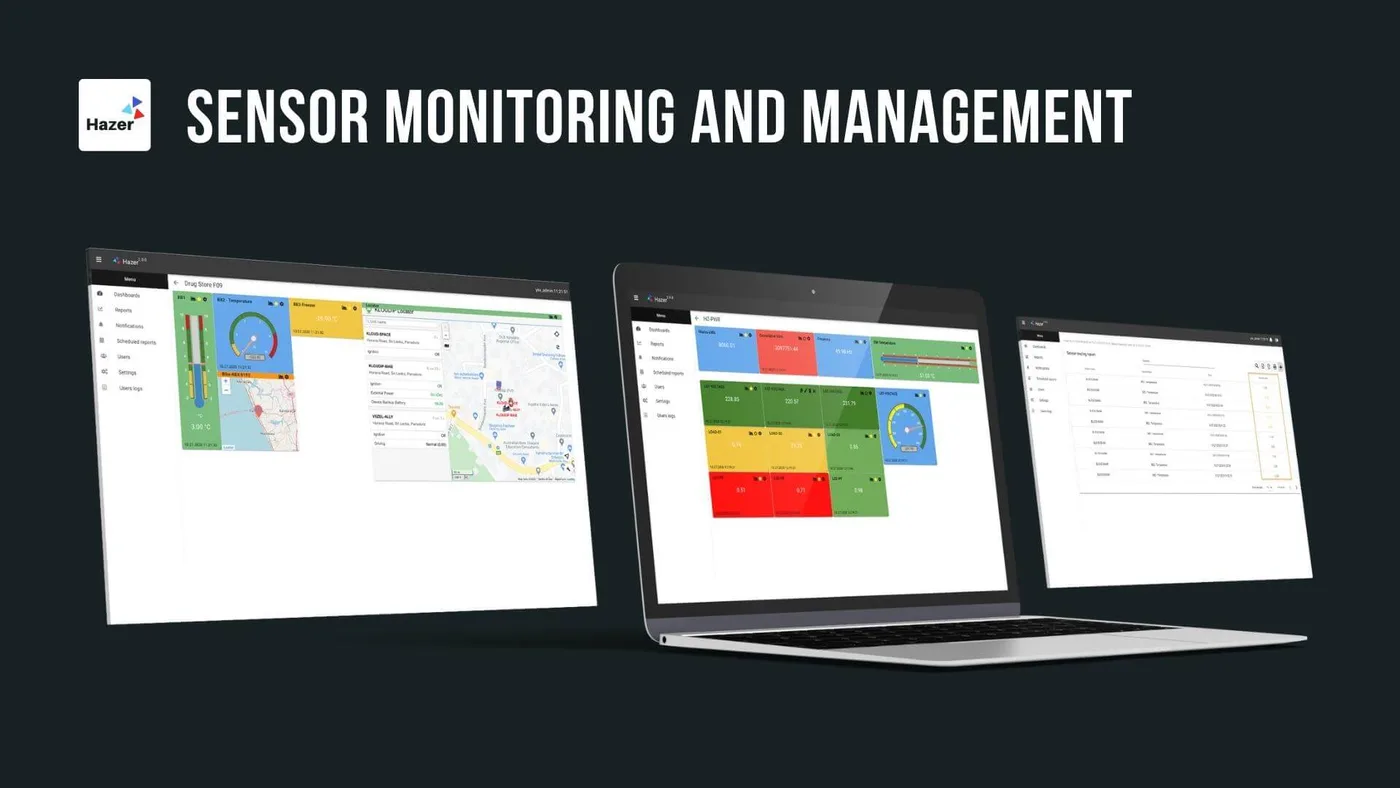
HAZER IoT platform
HAZER is KLOUDIP's IoT platform for managing buildings, vehicles and machinery through sensors. Connecting a warehouse takes three steps:
- Fit sensors for the equipment and conditions you want to watch.
- Connect them to HAZER through gateways, or connect existing equipment directly if it can talk to the internet.
- Build a dashboard that shows every parameter as a widget on laptops and phones.
The dashboard
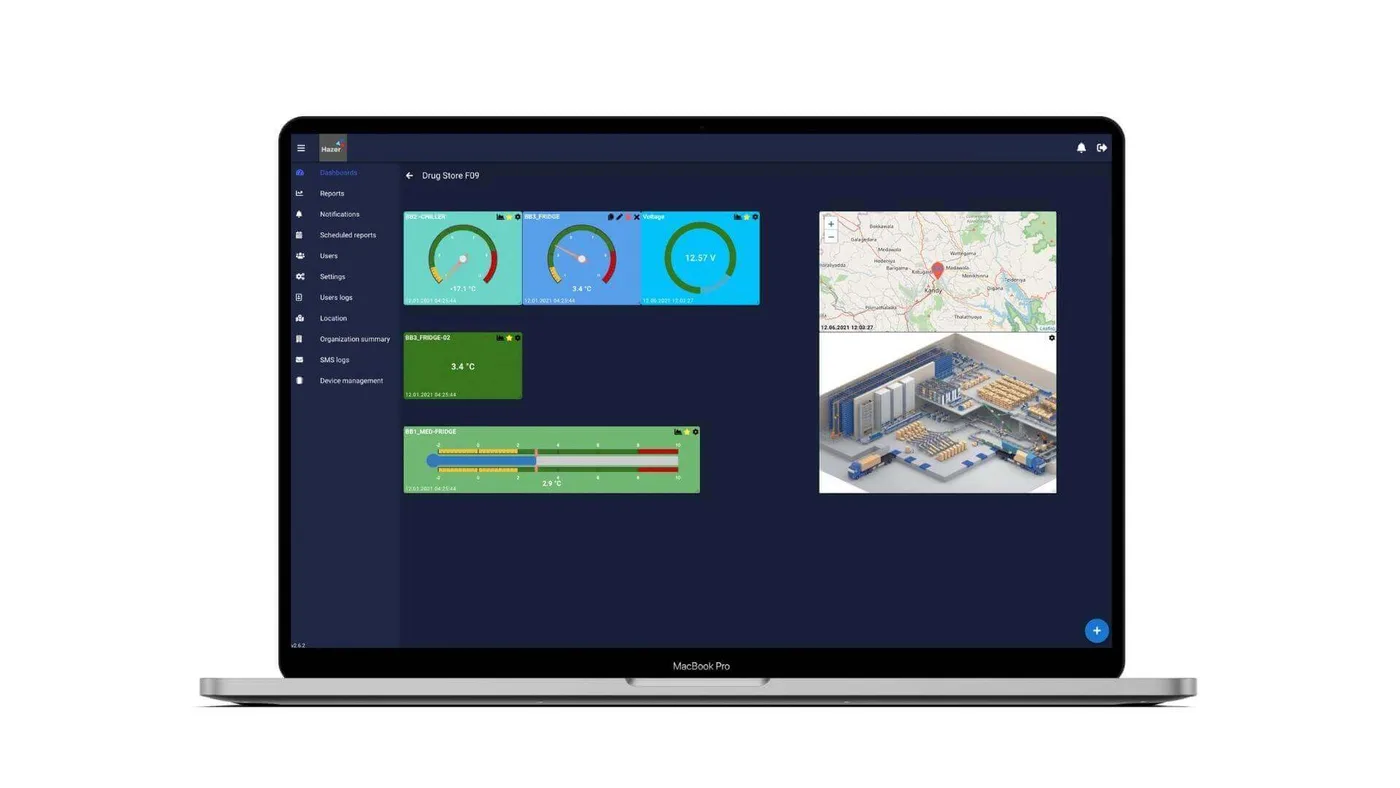
HAZER dashboard: widgets, map and plan views
Every sensor is a widget that changes colour with its state, shown on a map or floor plan. When a box goes onto a shelf with an ultrasonic sensor, the widget changes colour and the manager knows the space is taken, with no walk-round check. The same happens for gas, temperature, unauthorised access, equipment faults and unusual energy use.
Create separate dashboards for smart shelves, for one cold or hazardous goods room, or for all air-conditioning units. When something goes wrong, HAZER alerts the right person by SMS, email, app notification or messenger, and an operator can send commands to equipment remotely.
You can also set rules in advance. For example: if a gas leak is detected, stop operations and sound the alarm. HAZER follows the rule the moment it happens, day or night.
Frequently asked questions
Can we monitor cold rooms and freezers?
Yes. Wireless temperature and humidity sensors report to HAZER, which alerts you the moment a limit is broken.
Do we need to replace our existing equipment?
No. Sensors are added to what you have, and equipment that can already connect to the internet can link to HAZER directly.
Can I manage the warehouse from home?
Yes. HAZER works in a web browser and in the mobile app on iOS and Android.
Talk to us
Tell us what you want to watch in your warehouse, and we will design the sensor set and dashboards. Contact KLOUDIP
First published on KLOUD LIVE in April 2022. Updated and revised in November 2026.