
When international companies enter a market, they raise the bar for everyone. As technology partner to DHL Global Forwarding in Sri Lanka, KLOUDIP built a cold chain monitoring system to meet DHL's standards for pharmaceuticals, and those standards are now available to any company in the region.
Key takeaways
- More than 1,000 wireless temperature and door sensors in trucks and warehouses.
- A separate temperature range for every client's box.
- Each client sees only its own cargo, through a QR code.
- Data flows to DHL's ERP through an API.
How cold chain monitoring has changed
- More precise. DHL's specifications made providers rethink acceptable deviations: even 1 °C matters.
- Always on. Ordinary laptops and phones replace special screens, so the control centre goes wherever staff go.
- One system. Managers, dispatchers, guards, drivers and warehouse staff work in the same solution.
- The whole chain. Factory, truck, warehouse and customer: only when the whole chain is controlled can quality be guaranteed.
The client
DHL Global Forwarding in Sri Lanka is operated by Exel Logistics Services Lanka (Pvt) Ltd, which specialises in pharmaceutical transport for DHL. Medicines and biologics are tightly regulated and need round-the-clock monitoring in storage and in transit. KLOUDIP monitors its main temperature-controlled warehouses and tracks around 100 of its vehicles.
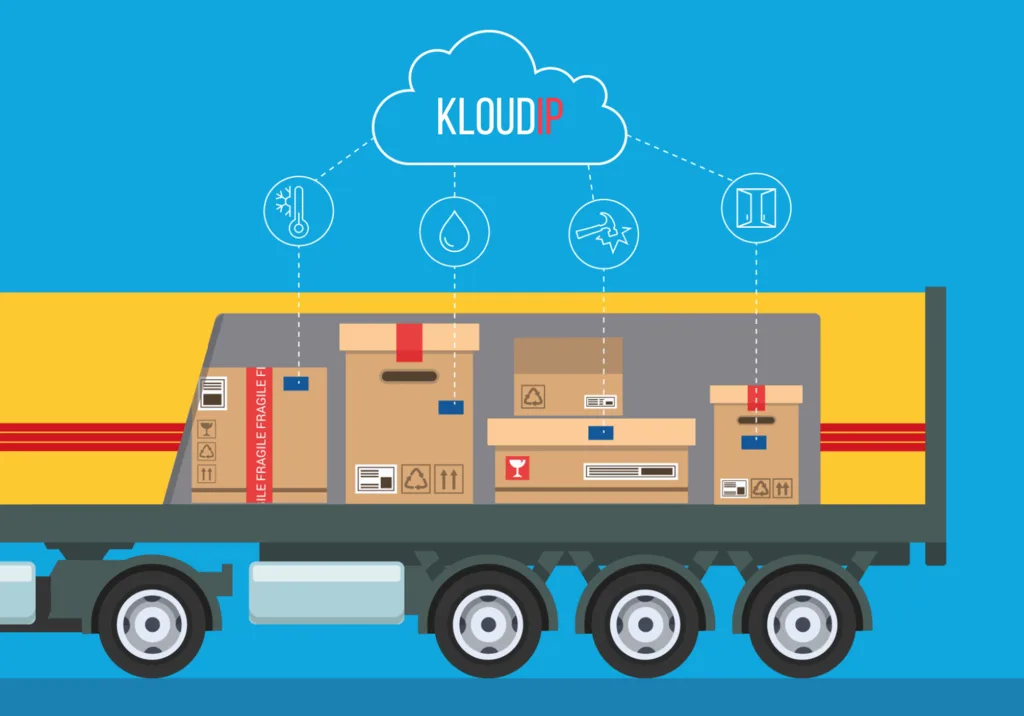
The requirements
- Medicines from many vendors travel together, each in its own small refrigerated box with its own temperature range.
- Each vendor must be able to see the conditions of its own cargo at any time.
- Temperature depends on more than the refrigeration unit: a door left open or an unnoticed power cut can spoil a whole load. Boxes must also be protected if they fall or open.
- DHL needed to reconfigure the system quickly and give access to its own staff and authorised client users.
The solution
Wireless sensors and hubs
No ready-made product met every requirement, so KLOUDIP developed the hardware and software set-up. It installed more than 1,000 wireless temperature, humidity and door sensors in trucks and facilities, connected to wireless hubs, with up to 16 Bluetooth sensors per vehicle tracker. No cabling inside the trucks kept costs down.
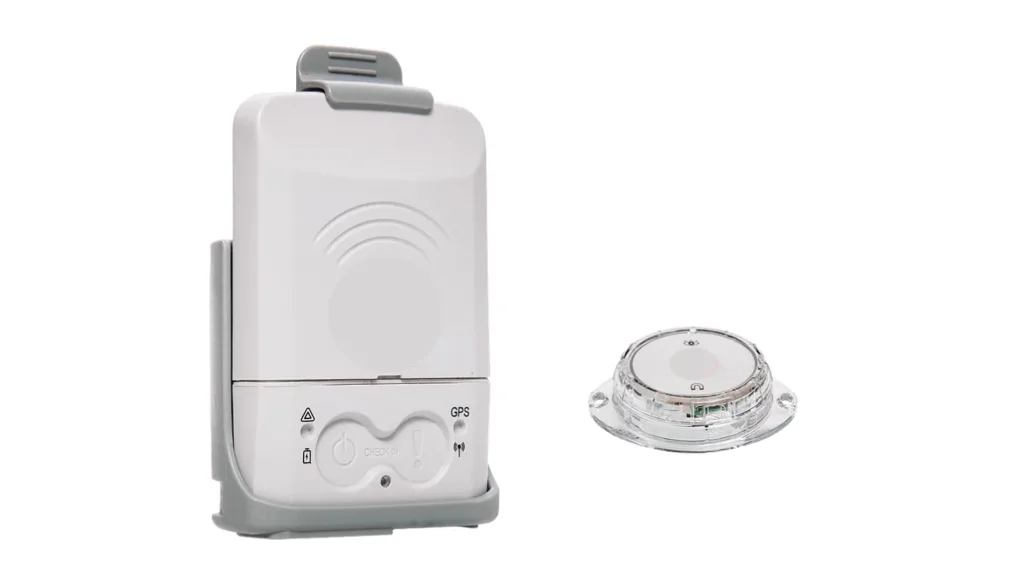
Wireless temperature sensors and hub
Any sensor can talk to any hub, in any truck or warehouse. That solves two problems: a sensor travels with its client's box when the cargo moves to another truck or a warehouse, and if a hub fails the sensor reports through the nearest one. Door sensors on each box raise an alarm if it opens or falls, during transport, loading and unloading.
HAZER software
HAZER, KLOUDIP's IoT platform, monitors thousands of sensors on a laptop or phone:
- Each sensor is a widget showing live values and changing colour when something is wrong.
- Alerts go out when temperature rises or a door opens: on screen for DHL staff, by SMS to clients.
- Sensors are grouped by cargo type, client, truck or facility, with no limit on numbers.
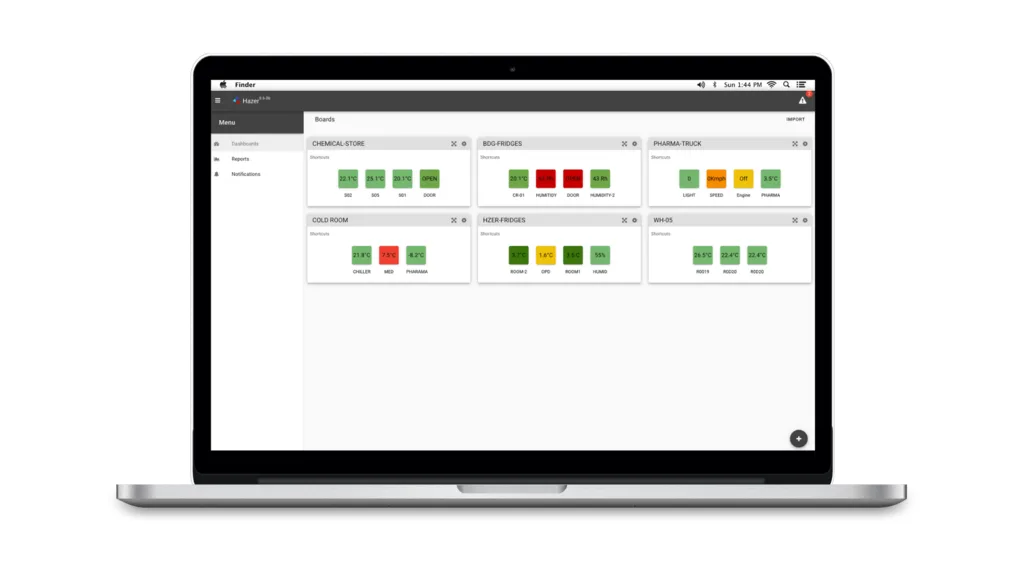
HAZER dashboard
Each client sees only its own cargo
- Each sensor has its own QR code.
- DHL shares the codes with its clients.
- A client scans the code and sees the temperature and other data on a laptop or phone.
- Clients see their own boxes, and nothing else.
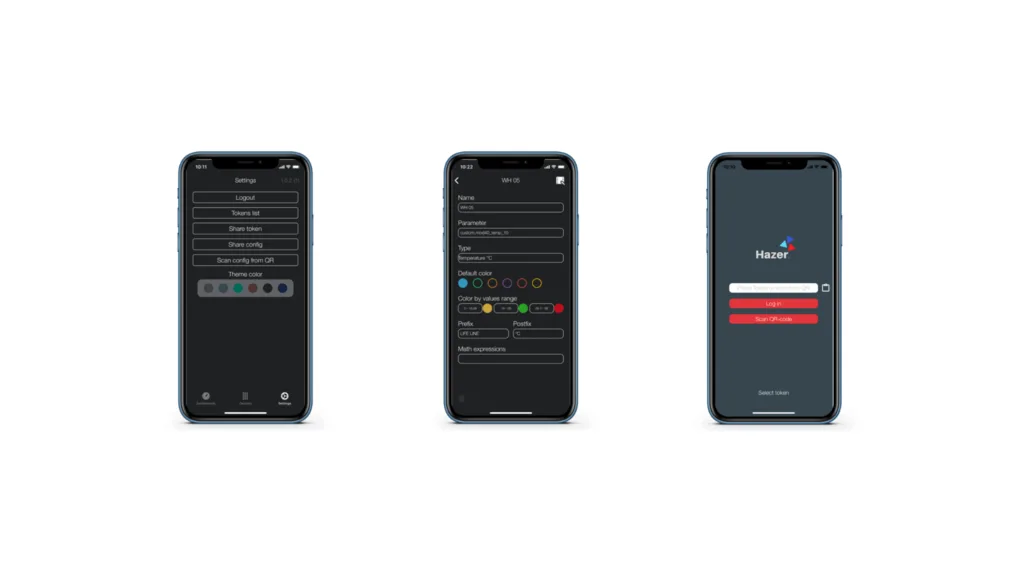
HAZER on mobile
The results
- Traceability for every sensor, with personal access for each client.
- Live cargo location, so everyone knows what is happening and where.
- Web and mobile in sync, with real-time alerts on phones.
- A control centre that works outside the office, configurable on the spot in the warehouse or truck.
- An API that sends monitoring data to DHL's ERP systems for accounting and transport management.
The business grew several times over as its customer base expanded, and the team presents HAZER to international colleagues as an example for the region. DHL also trialled the system in Singapore.
Frequently asked questions
How do you monitor many temperature ranges in one truck?
Each box gets its own wireless sensor with its own limits. HAZER alerts on each one separately.
Can our clients see their cargo temperatures?
Yes. Each client gets access to its own sensors only, for example through a QR code.
Can HAZER send data to our ERP?
Yes, through its API.
Talk to us
Move or store temperature-sensitive goods? HAZER is ready to run in your company too. Contact KLOUDIP
First published on KLOUD LIVE in January and September 2020 (two articles, combined here). Updated and revised in November 2026.